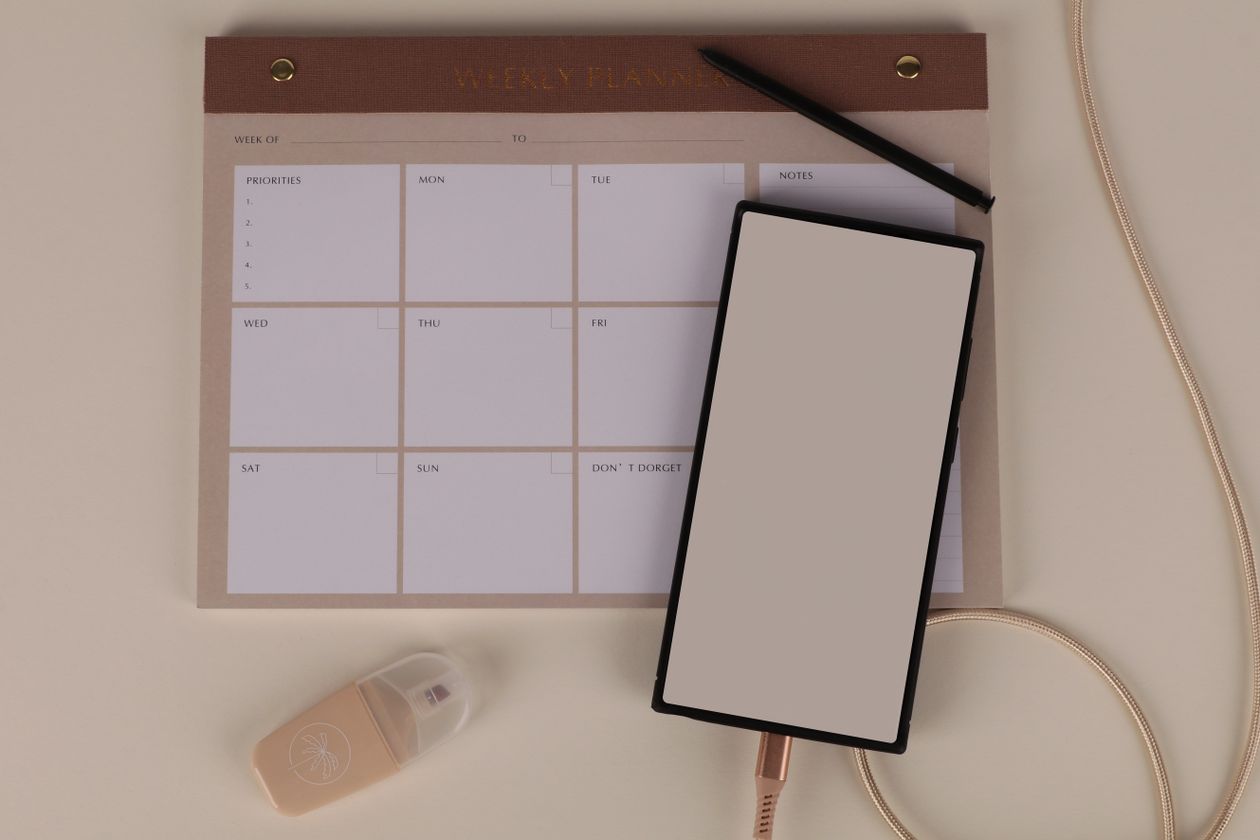
Priya runs a small stationery shop and spent almost every Sunday night of last year staring at the Notes app on her phone, trying to think of something to post before the week got away from her. Some weeks she posted three times. Some weeks she posted nothing, then felt guilty about it, then avoided the app entirely because opening it made her feel behind. She wasn't short on things to say about her shop. She was short on a system for deciding what to say and when.
That's what a content calendar actually fixes. Not creativity, not quality, just the exhausting, repeated decision of "what do I post today?" Answer that question once a month instead of once a day, and posting stops being a chore you dread.
A content calendar doesn't need to be fancy
Forget the elaborate marketing calendars with fifteen columns and color-coded funnels. For a small business posting three to five times a week, a content calendar needs exactly four things: the date, the platform, the topic in one line, and whether it's promotional or value-adding. That's it. A spreadsheet, a notes doc, or the back of an envelope all work. The tool matters far less than the habit of filling it in before the week starts, not during it.
According to Buffer's 2025 State of Social report, small businesses that plan content at least a week in advance publish 35% more consistently than those who plan post by post. Consistency, not sophistication, is what a calendar buys you.
Build it around content pillars, not random ideas
Before you fill in a single date, list three to five content pillars: recurring themes you can always return to when you're out of ideas. For Priya's stationery shop, that's new stock, behind-the-scenes making or sourcing, customer notes and reviews, and quick tips for people who love stationery. Every post you'll ever need to plan falls into one of those buckets.
Pillars turn "what do I post" into "which pillar is due." That's a much smaller decision, and it's one you can make in ten seconds instead of staring at a blank screen wondering if anyone cares what you had for lunch.
The one-hour monthly planning session
Block one hour on the same day every month, ideally the last Sunday or the first Monday. In that hour: note any dates that matter that month (a sale, a new product, a local event, a holiday relevant to your customers), assign each week a rough mix across your pillars, and write a one-line topic for each planned post. You are not writing captions yet. You're deciding what each post is about, so that on the day itself you're filling in details, not starting from zero.
Sprout Social's 2026 Content Benchmarks found that businesses using a recurring planning session, rather than ad hoc posting, spent 60% less time per week on social media overall, despite posting just as often. The time isn't saved by posting less. It's saved by removing the daily decision fatigue.
Skip the spreadsheet entirely
Frekto turns your content pillars into a month of on-brand, ready-to-schedule posts in minutes, captions and visuals included. Fill the calendar without filling it in by hand.
Try Frekto freeLeave room for the unplanned post
A calendar that's booked solid a month out becomes a cage the moment something spontaneous happens, a funny customer moment, a product that suddenly sells out, a local news story you can genuinely react to. Leave one slot a week open and unassigned. Real-time posts consistently outperform scheduled ones on engagement, because they read as alive rather than automated. The calendar's job is to cover the predictable 80%, not to script every single post.

Review it for five minutes, then move on
At the end of each month, before you plan the next one, spend five minutes looking at what actually got posted versus what you planned. Not to judge yourself, just to notice patterns. Did the behind-the-scenes pillar consistently outperform new-stock posts? Post more of it next month. Did Fridays get skipped three weeks running? Move that slot somewhere realistic instead of pretending it'll happen.
Adjust the calendar for slow and busy seasons
A calendar built in a quiet month will feel wrong the moment things get busy, and a calendar built during your busiest stretch will feel bloated once things calm down. Rather than rebuilding it from scratch each time, keep two versions: a full one with five posts a week for normal months, and a lean one with your floor of two for the weeks you know will be hectic, a big event, the holidays, exam season, whatever your busy period looks like. Swap between them instead of trying to force the same plan onto every month of the year.
Knowing in advance which weeks are "lean calendar" weeks also removes the guilt of posting less during them. It was planned that way, not a failure to keep up.
Priya now spends that one hour a month, plus about ten minutes a day writing captions for what's already on the calendar. Her posting went from erratic to five times a week, and she stopped feeling the low-grade guilt that used to follow her around every Sunday. The calendar didn't make her more creative. It just gave the creativity somewhere to land.
Once your calendar is running, the next thing worth fixing is what happens when life gets busy and a week nearly slips. Our guide on staying consistent picks up exactly there.