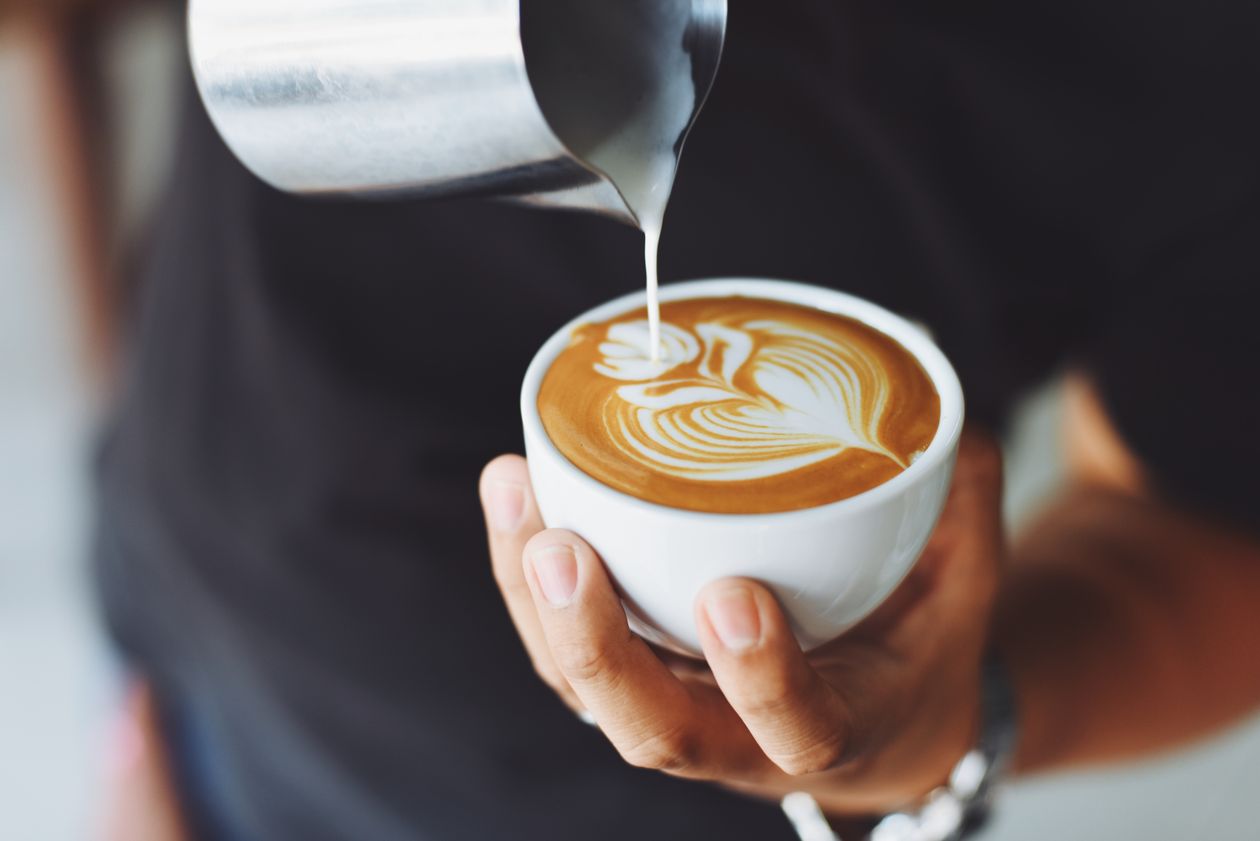
Picture this. It's a rainy Thursday morning and Sarah, who runs a small coffee shop in Bristol, is sitting in the back office between the morning rush and the lunch crowd. She's got 20 minutes, a cold flat white, and her phone open on Instagram. Her last post got 14 likes. Before that, 11. The one before that, 9. She's been posting for six months and she's got 340 followers, most of them family and a few regulars. She types into Google: "why isn't my café Instagram growing?" and finds 47 articles that all say the same vague things about "engaging content" and "building community." Nothing useful. Nothing real.
Sound familiar? If you run a café or a small food business, you've probably been there. The frustrating part isn't that Instagram is hard. It's that most of the advice out there was written for influencers with ring lights and content teams, not for someone who's also making the coffee, managing the rosters, and chasing invoices.
So let's talk about what actually moves the needle, without the fluff.
Why most café Instagram accounts are invisible to local customers
The biggest misconception is that more followers means more customers. It doesn't, not directly. What matters is whether the right people, people who could actually walk into your café, are seeing your posts. And that comes down to how Instagram's algorithm reads your account.
According to Hootsuite's 2025 Social Trends Report, Instagram's discovery algorithm now weights "interest signals" more heavily than follower counts. That means a café with 400 engaged local followers can outperform one with 4,000 disengaged ones when it comes to reaching new people in the same area. The algorithm rewards accounts where people actually stop scrolling, read, and respond.
Most café accounts fail on one of three things. They post inconsistently, so Instagram stops showing their content to even existing followers. They use the wrong hashtags, the massive ones with millions of posts where they're buried in seconds. Or they post beautiful photos with no caption that invites any response, so engagement stays flat and reach stays narrow.
None of these are difficult to fix. They just take a system.
The posting schedule that works for food businesses
Four posts a week sounds like a lot when you're currently posting once a fortnight. But here's the thing: once you know what you're posting each day, it takes maybe 25 minutes a week total. The goal isn't to be creative every time. The goal is to be consistent.
A simple weekly structure that works well for cafés and food businesses looks like this. Monday gets a product shot, a drink, a dish, something visual that shows what you do. Wednesday is behind the scenes: prep, your team, the ritual of opening up, the supplier you've worked with for years. Friday is an engagement post, which means something that invites a response: a question about what people are ordering, a this-or-that between two menu items, or a local shoutout. Sunday is a community post, something about the neighbourhood, a regular customer (with permission), or what's happening locally that weekend.
That mix covers the four content types that perform consistently well for local hospitality businesses. And it gives your feed variety, so it doesn't look like you're just running an ad for yourself every day.
According to Sprout Social's 2026 Content Benchmarks, food and drink businesses that post four or more times a week see 67% higher organic reach than those posting once or twice. That's not a small difference.

How to stop wasting your hashtags
Using #coffee is the Instagram equivalent of putting a flyer on a motorway. There are over 200 million posts tagged with it. Your photo appears, stays visible for maybe four seconds, and disappears into the void.
What you want instead are hashtags with between 10,000 and 300,000 posts. Competitive enough that people actually browse them, small enough that you stay visible for a while. For a café in, say, Manchester, that means something like #ManchesterCafé, #NorthernQuarter, #MCRFood rather than #Café or #CoffeeShop.
A good hashtag set has three layers. Two or three location tags that are specific to your city or neighbourhood. Two or three niche tags that describe your type of business or your style. And two or three content tags that describe what's actually in the photo. Seven to nine total is the current sweet spot, according to Meta's own creator guidance published in early 2026. More than fifteen starts to look like spam, and Instagram has confirmed publicly it doesn't improve reach.
One more thing: save your hashtag sets. You'll have three or four combinations that work well for different types of posts. Keep them in your phone notes and paste them in rather than typing them fresh each time.
The habit that doubles engagement faster than anything else
Reply to every comment within the first hour of posting. That's it. That single habit, done consistently, will do more for your reach than any hashtag strategy or posting time optimisation.
When you reply quickly, Instagram reads the comment thread as active conversation and shows the post to more accounts. It doesn't matter whether the comment is "looks amazing" or a single emoji heart. A reply counts. According to Later's 2025 Instagram Engagement Study, accounts that respond to comments within 60 minutes see an average of 89% more reach on that post compared to accounts that don't reply at all.
Set a reminder on your phone for 15 minutes after you post. Spend two minutes replying to whatever's come in. That's your engagement window, and it's worth protecting.
There's a related habit that most people skip: spending five minutes engaging with other local accounts before you post your own content. Comment on posts from nearby restaurants, local event pages, neighbourhood accounts. It warms up the algorithm to your location context and often leads to those accounts engaging back on yours. It feels small but the compounding effect over a few weeks is real.

Write captions that actually start conversations
Most café captions describe what's in the photo. "Our new autumn latte, available now." That's fine but it doesn't generate the engagement that grows your account. Every caption should end with either a question or a clear call to action that takes one second to respond to.
"Which would you order today, the chai or the oat flat white? Tell us below" is better than "Both available this morning." "Tag someone who needs to try this" is better than "Try our new brownie." The difference isn't much effort, but the effect on engagement is significant.
Keep captions short on product posts, three to five lines, and save longer ones for behind-the-scenes or storytelling posts where people are already invested. And write the way you talk. If you wouldn't say "our artisanal small-batch single-origin pour-over" to a customer at the counter, don't write it in your caption either.
When to post for maximum local visibility
For food and drink businesses specifically, three time windows consistently outperform everything else. The morning commute slot between 7 and 9am catches people making decisions about where to stop on the way to work. The lunch window between 12 and 1pm reaches people who are already thinking about food. And the early evening slot between 7 and 9pm hits people winding down and planning their week.
Saturday morning between 8 and 10am is the single best slot of the week for most local food businesses. If you only post once a week, make it Saturday morning. That's when your potential customers are at their most leisurely and most likely to actually come in.
That said, your own audience data matters more than any general benchmark. Once you've got at least four weeks of consistent posting, check your Instagram Insights under "Most active times" and adjust accordingly.
Tired of writing captions from scratch every time?
Frekto generates on-brand Instagram captions, hashtags and animated post visuals for your café in about 60 seconds. Set up your brand once and it does the rest.
Try Frekto freeHow long before you see results?
Honestly? Give it six to eight weeks of consistent posting before you judge it. Not because Instagram is slow, but because you need enough data to see what's working. In the first two weeks you're just building the habit. By week four you'll start to see which types of posts get the most engagement from your specific audience. By week eight you should see a clear pattern and your follower growth should have picked up noticeably.
The accounts that grow fastest aren't the ones with the best photography or the most creative ideas. They're the ones that show up every week without fail. Sarah, from the beginning of this post, could have 900 local followers by the time autumn comes around if she posts four times a week starting now. That's not a big number, but if half of them are within walking distance and they're seeing her posts in their feed every few days, that's real business.
Start with the posting schedule. Get consistent. Then layer in the hashtag strategy and the engagement habits. You don't have to do all of it at once. One change at a time, stuck to properly, beats a perfect strategy that falls apart after two weeks.
And if you want to cut the time it takes to create each post, read our guide on the best posting times for local businesses, it pairs well with everything here.